
Rio Arriba County Court Records After a Jail Arrest
An arrest and booking at the Rio Arriba County Detention Center are not the same as a filed criminal case. The jail may receive arrest paperwork and hold the person for first appearance, but the court record develops through the complaint, information, indictment, orders, bond decisions, and later filings. Rio Arriba County is in New Mexico's First Judicial District with Los Alamos and Santa Fe counties, and the district courthouse contact for Rio Arriba is in Tierra Amarilla.
For the custody side, use jail inmate records. For booking-photo questions, use jail mugshots. Court records after a Rio Arriba arrest focus on the filed case: what charges are pending, whether the charge changed, whether bond was set, whether a warrant was issued, and whether the case ended in dismissal, plea, conviction, or another disposition.
The First Judicial District contact page is the local courthouse source. The Rio Arriba District Courthouse listing gives the courthouse address, phone, fax, hours, and mailing address.
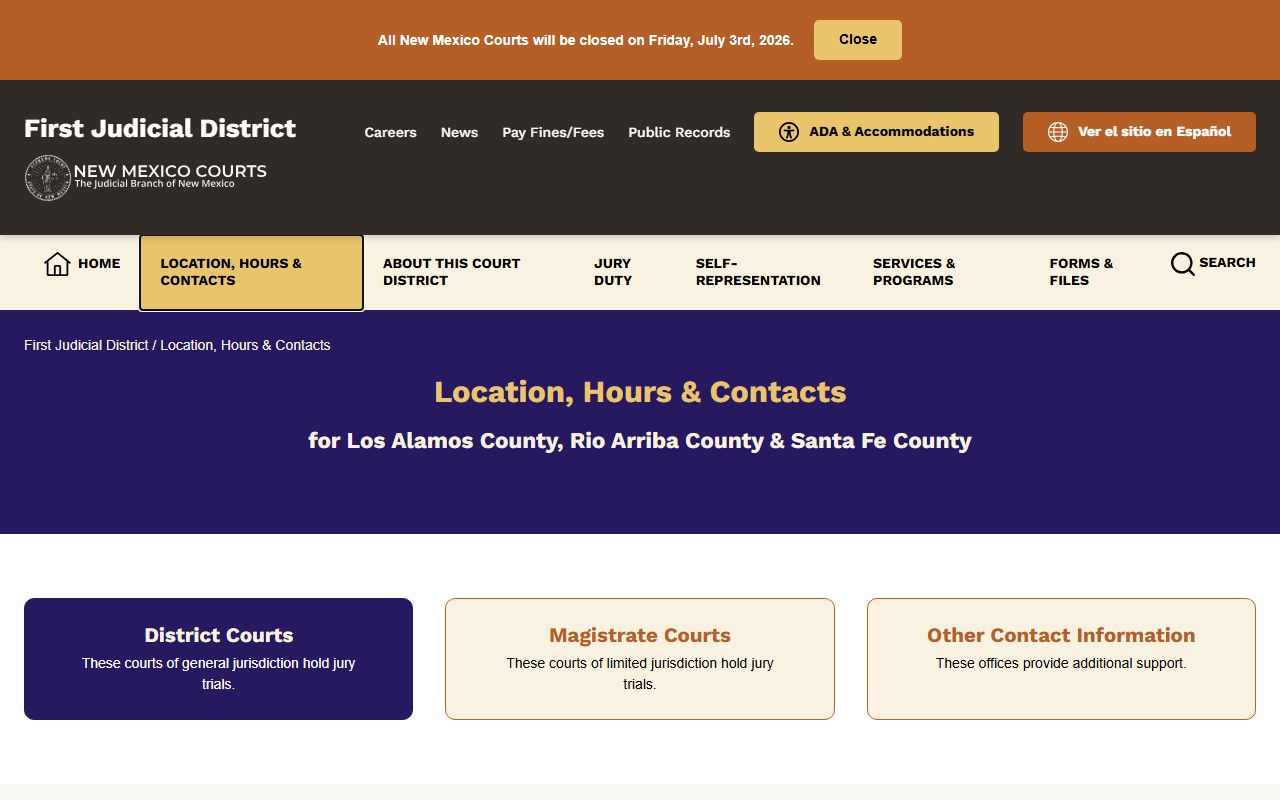
Use that courthouse contact when an online search does not show a case that should exist, when a case detail appears inaccurate, or when a document rather than a docket summary is needed.
How to Find Rio Arriba County Court Records After an Arrest
Start with the jail if the arrest is very recent. Call (575) 588-7350 and ask what court is handling the first appearance, whether bond has been set, and whether any outside hold affects release. Then search the New Mexico court portals after the case has had time to open. Recently booked people may not appear immediately in a court index, especially if the booking happened before the charging document was filed.
- Search New Mexico Case Lookup by defendant name or case number after the court case has opened.
- Use Odyssey Public Access for the official court access portal route when available.
- Check magistrate court for early misdemeanor, DWI, traffic, and felony preliminary-hearing activity.
- Check district court for felony cases, later-stage prosecution, criminal appeals from lower courts, and major orders.
- For filed documents, use re:SearchNM if eligible or submit a court records request through the court custodian or the New Mexico Courts IPRA portal.
New Mexico Case Lookup is for individual electronic court records. Its disclaimer prohibits attempts to download multiple records per transaction, and data use is subject to NMSA 1978, Section 14-3-15.1. If a case detail is wrong, the portal instructs users to notify the court where the case was heard.
The state case portal is separate from jail custody. New Mexico Case Lookup is the court-record entry point, not the Rio Arriba jail's custody line.
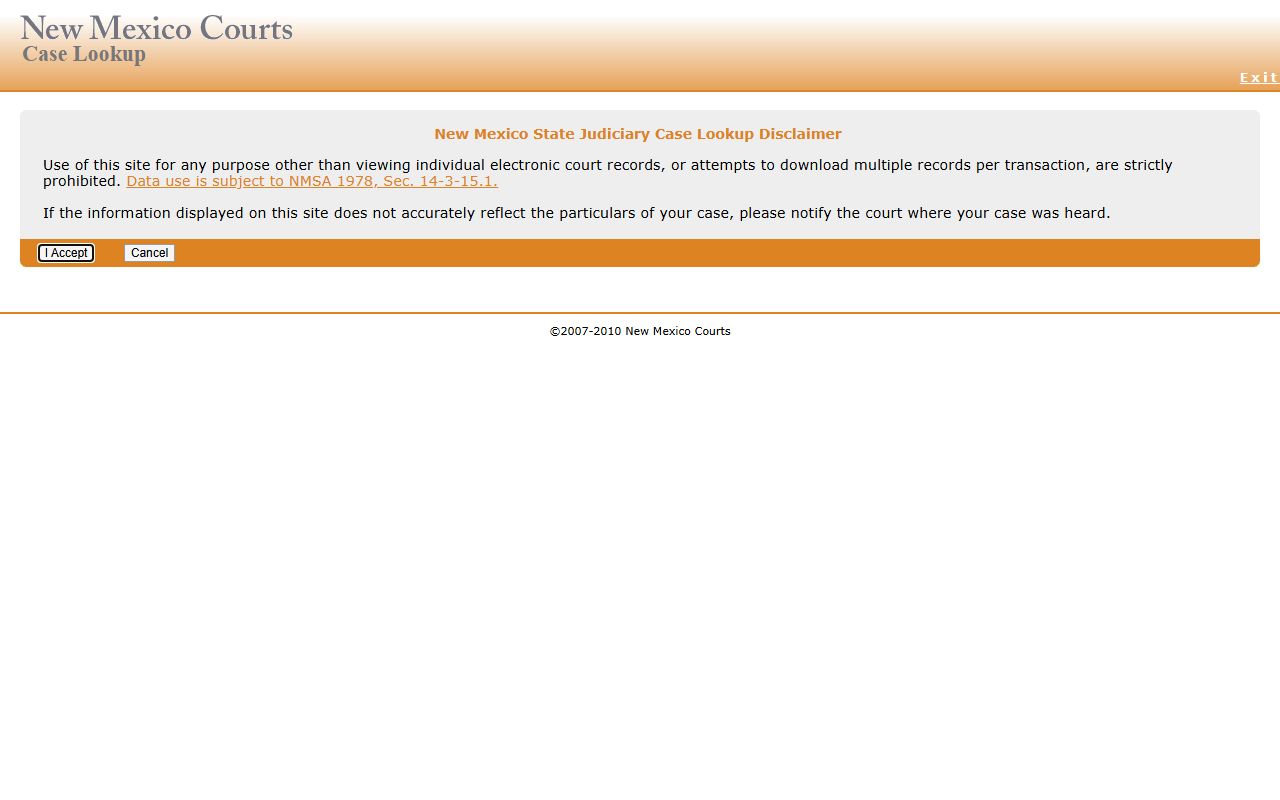
When a search returns no result, confirm spelling, aliases, the case number if known, and whether the case may be in magistrate court, district court, or not yet filed.
How Charges Get Filed After an Arrest: Complaint, Information, and Indictment
The jail booking charge can differ from the charge that appears later in court records after an arrest. A booking allegation may come from arrest paperwork. The court charge begins when the prosecutor or court process creates a charging document. In Rio Arriba County, state criminal prosecutions are handled by the First Judicial District Attorney for Santa Fe, Los Alamos, and Rio Arriba counties.
| Complaint | Information | Indictment | |
|---|---|---|---|
| Filed By | Officer or prosecutor, depending on case stage | Prosecutor | Grand jury |
| Common Use | Early criminal proceedings, misdemeanors, and preliminary felony matters | District court felony prosecution after waiver, preliminary process, or other permitted route | Grand jury felony prosecution |
| What It Starts | A filed criminal case or early charge record | A district court charge record | A district court charge record based on grand jury action |
| Why It Matters | May differ from the arresting officer's booking allegation | May amend or replace earlier allegations | May add, remove, or reframe charges after grand jury review |
Charge Status in Court Records After an Arrest
Charges can change after a Rio Arriba County arrest. A court record may show the original complaint, an amended charge, a reduced charge, a dismissal, a plea, or a conviction. Treat the docket and filed orders as more authoritative for the case than a booking note, especially when the prosecutor has amended the charge or a judge has entered a ruling.
| Status | What It Means |
|---|---|
| Pending | The charge is still active and has not reached final disposition. |
| Amended or reduced | The prosecutor or court changed the charge from the original arrest allegation or earlier filing. |
| Dismissed | The court record shows that a charge or case was dropped and is not a conviction. |
| Nolle prosequi | The prosecution declined to continue a charge or case, subject to the exact order and procedural context. |
| Conviction | A final adjudication of guilt or plea. It is separate from arrest, booking, and accusation. |
Bond and Release After an Arrest
The Rio Arriba detention FAQ says bond amount is set by the court. During court business hours, bond can be posted at court. After business hours, the county says bond can be posted at the Sheriff's Department in Espanola or Tierra Amarilla. Some crimes have no bond set until first appearance, and approval of surety bonds must be done by the appropriate judge.
New Mexico court rules also shape release decisions. New Mexico Courts says revised pretrial release and detention rules became effective July 1, 2017. Rule 5-401 governs recognizance, unsecured appearance bonds, secured bonds, and release conditions in district criminal cases. Rule 5-409 governs pretrial detention when the state seeks detention under eligible dangerous felony circumstances.
| Bond Type | How It Works |
|---|---|
| Recognizance or PR | Release based on a promise to appear and follow conditions. |
| Unsecured appearance bond | A bond amount exists, but secured money is not required up front unless conditions are violated. |
| Cash bond | Money is posted directly through the court or authorized office to secure release. |
| Surety bond | A bondsman or surety posts bond for a fee; Rio Arriba's FAQ says judge approval is required. |
| No-bond hold | Release may be unavailable until first appearance or because another authority has a hold. |
Before traveling, confirm the exact amount, payment method, court location, and whether a probation/parole, USMS, ICE, tribal, or out-of-county hold would prevent release even after bond is posted.
Warrants That Lead to an Arrest
No official Rio Arriba County Sheriff's Office public online warrant search was found on the sheriff page, and no official county most-wanted or active-warrant list was located in the county sheriff or detention materials reviewed. For warrant-related court records after an arrest, search New Mexico Case Lookup for docket activity and contact the appropriate court. For sheriff records, call the sheriff's Tierra Amarilla office at (575) 588-7271 or Espanola office at (505) 753-3329 during administrative hours.
A warrant can lead to booking at the Rio Arriba County Detention Center if the person is arrested locally or accepted on a hold. Common warrant types include arrest warrants for new accusations, bench warrants for failure to appear or court-order violations, fugitive holds from another jurisdiction, and probation or parole holds. If asking about your own warrant in person, understand that resolving an active warrant may lead to arrest.
Charges vs. Convictions
A court charge after a Rio Arriba arrest is an accusation. It may be supported by probable cause, a complaint, an information, or an indictment, but it is not a conviction. A conviction requires a guilty plea, verdict, or other final adjudication. Dismissed, reduced, or amended charges should be read according to the final court disposition rather than the booking allegation alone.
| Charge | Conviction | |
|---|---|---|
| Stage | Accusation after arrest or filing | Final guilt finding, plea, or adjudication |
| Record Source | Complaint, information, indictment, docket entry, or booking context | Judgment, sentence, plea, verdict, or final order |
| Can Change | Yes, charges may be amended, reduced, added, or dismissed | Changes require later court action such as appeal, correction, or post-judgment relief |
| Public Meaning | Shows what was alleged | Shows the final adjudicated outcome |
Sealed vs. Expunged Arrest Records
New Mexico's Criminal Record Expungement Act provides a court process for qualifying criminal and related public records. Expungement is not automatic just because someone was released from jail, posted bond, or had a charge reduced. Eligibility and procedure depend on the case outcome, waiting periods, statutory exclusions, and the order entered by the court.
| Sealed or Restricted | Expunged | |
|---|---|---|
| Visibility | Public access is limited by court order, statute, or record type. | Qualifying criminal and related public records are removed from ordinary public view under a court order. |
| How It Happens | Through a court rule, statute, confidentiality law, or court order. | Through a petition and court order under New Mexico expungement law. |
| Effect on Online Search | The case or document may be hidden, redacted, or unavailable to the public. | Public case and related agency records may be removed or restricted according to the order. |
| Rio Arriba Path | Ask the court custodian about the specific case restriction. | Use the New Mexico court process and verify with DPS expungement guidance. |
Public Records Requests for Court and Arrest Materials
New Mexico IPRA applies to public records held by public bodies, subject to exceptions. The New Mexico DOJ IPRA guide treats law enforcement records as public records subject to statutory redaction and withholding rules. Law enforcement records may include visual or audio materials, but nonpublic information can be redacted or digitally obscured. Court files should be requested from the court where the case was filed, not from the jail, when the record is a court docket, filing, order, or exhibit.
The state courts public records page links IPRA, Case Lookup, and re:SearchNM. The New Mexico Courts public records page is the statewide court records routing page.
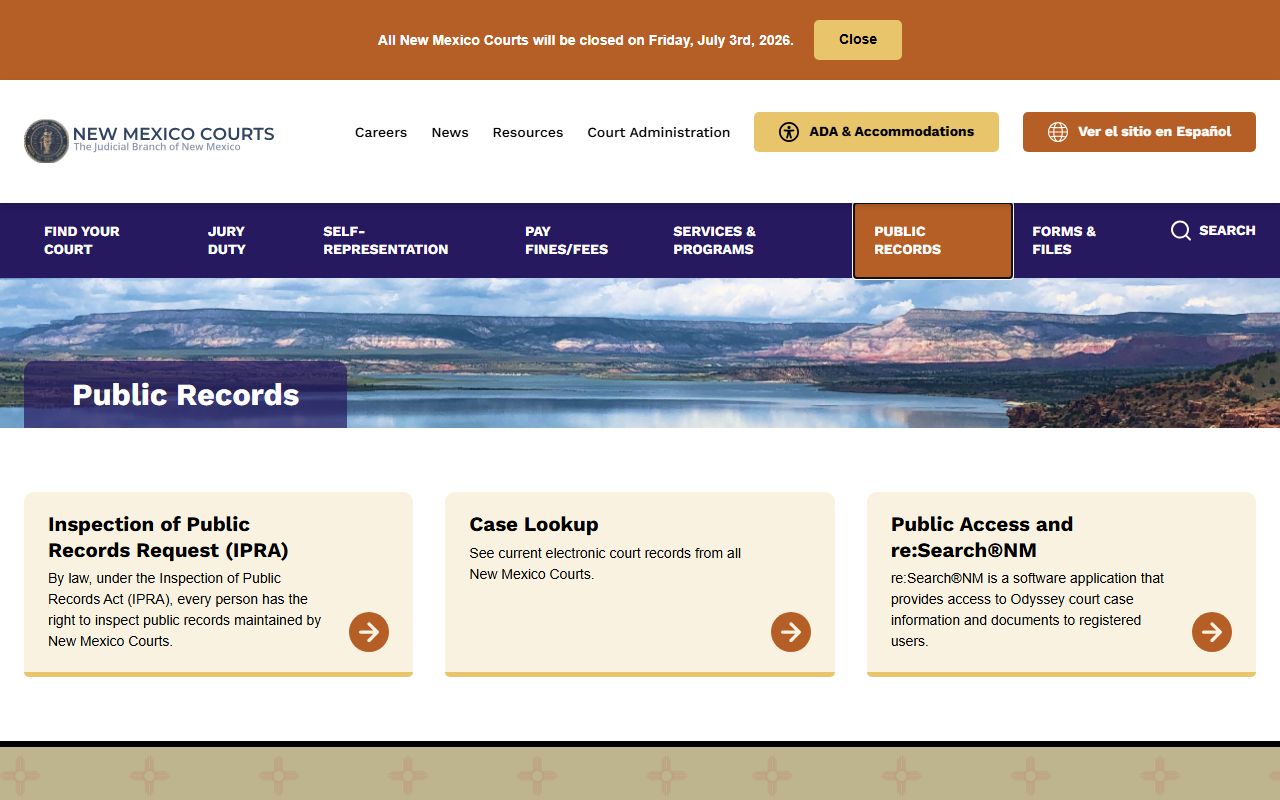
Use the public-records route when a court document is needed, when the online portal only shows a docket summary, or when the record may require staff review before release.
Background Check Considerations
Casual case lookup is not the same as an FCRA-compliant background check. Employers, landlords, lenders, insurers, and others using records for regulated eligibility decisions must follow the Fair Credit Reporting Act and other applicable laws. A court record may also be incomplete without checking final disposition, expungement status, identity matching, and whether the person in the record is the same person being evaluated.
Important: Do not use this information for employment, tenant screening, credit, insurance, or any other FCRA-covered purpose.
Restricted Court Records After an Arrest in Rio Arriba County
Not every arrest-related record is public in full. Juvenile matters, sealed files, protected victim or witness information, medical and mental-health information, certain law enforcement details, ongoing investigations, and records affected by court orders may be unavailable or redacted. The Rio Arriba detention FAQ also states that adult inmate medical information is not released to callers or family without authorization.
When a court portal result is missing, do not assume the arrest did not happen or that no case exists. The case may not yet be filed, may be in a different court level, may use a different spelling or alias, may have been sealed or expunged, or may require direct court custodian assistance.